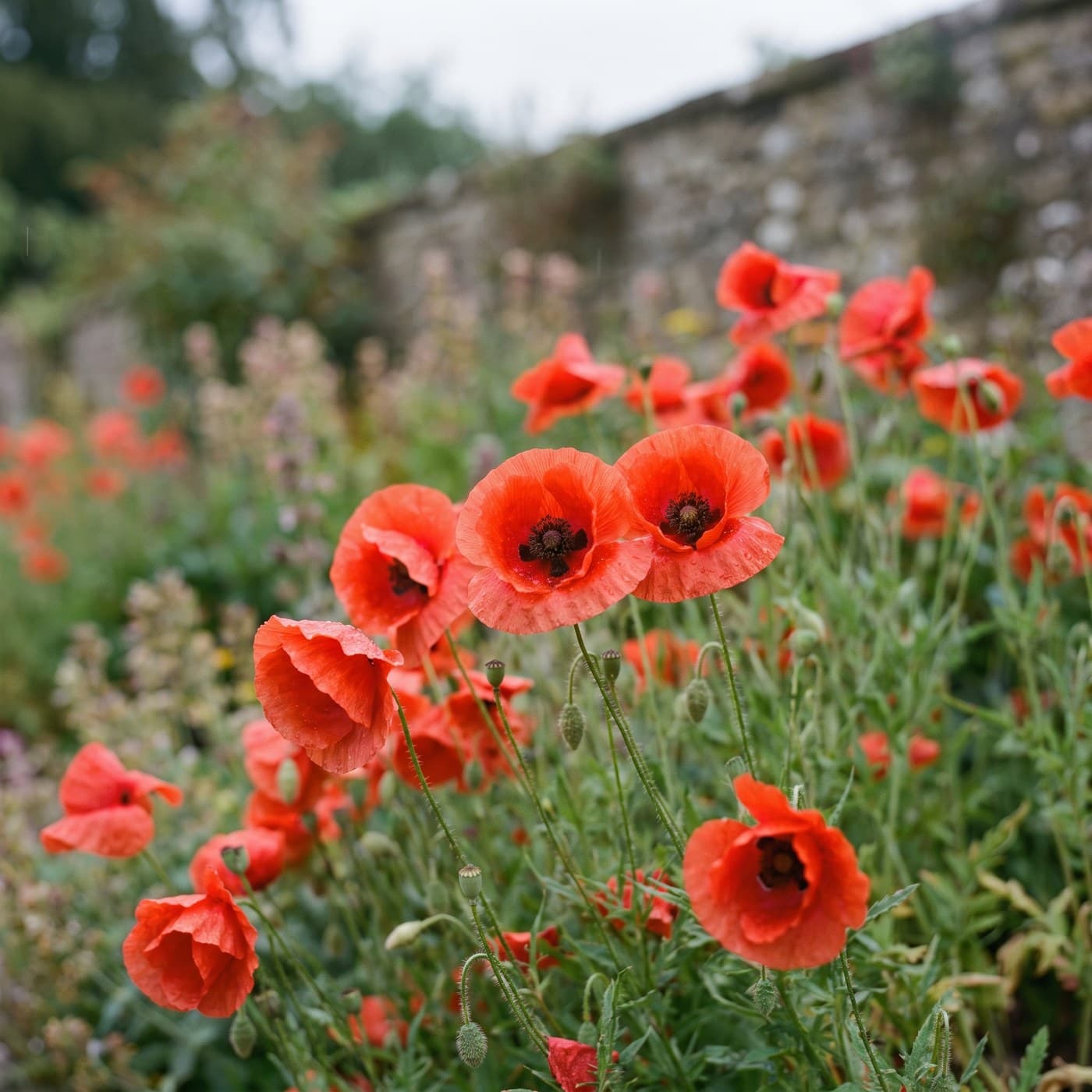
Field & Shirley Poppy Mix Seed Pack
Papaver rhoeas
A scatter-and-walk-away superbloom of silk poppies.
1,000 seeds per pack · one-off purchase, no subscription
Buy now- 1,000 seeds, hand-packed in a labelled inner packet with a printed quick-start card
- Dispatched within 1–3 business days, tracked, to any UK address
- Germination guarantee: if they don't sprout, we send them again
Why grow it
- The easiest sowing there is: scatter on raked bare soil, press in, don't cover — poppy seed needs light to germinate
- Autumn sowing means winter does the work — plants flower weeks earlier and stronger than a spring scatter
When to sow
Scatter September to October on the surface — never buried — for a late-spring superbloom.
| Scotland & the North | Scatter now — September (Scotland closes ~2 weeks earlier) |
|---|---|
| Midlands, Wales & Northern Ireland | Scatter September to October |
| South of England | Scatter September to October (mildest South West: to late October) |
Growing questions
Why must the seed stay on the surface?
Poppy seed is triggered by light — bury it and it simply waits underground. Rake the soil loose, scatter, press the seed in with a board or your palm so it makes contact, and don't cover it. That's the whole technique.
What does winter do to the seed?
The cold and the freeze-thaw cycles settle the seed into the surface and break its dormancy, so it germinates with the first warmth — either in autumn as small overwintering rosettes, or in early spring. Both routes flower earlier and bigger than a spring sowing.
Will they really come back next year?
If you let a few seed pods ripen and shake them where you want flowers, yes — field and Shirley poppies are famous self-seeders. One good year can start a patch that renews itself for seasons.
Which poppies are in the mix?
Papaver rhoeas in two forms: the wild red field poppy and the Shirley strain — the cottage-garden selection bred from it by a Victorian vicar — in whites, pinks, corals and picotee edges. Ornamental, garden-safe, and hardy.