California Poppy Seed Pack
Eschscholzia californica
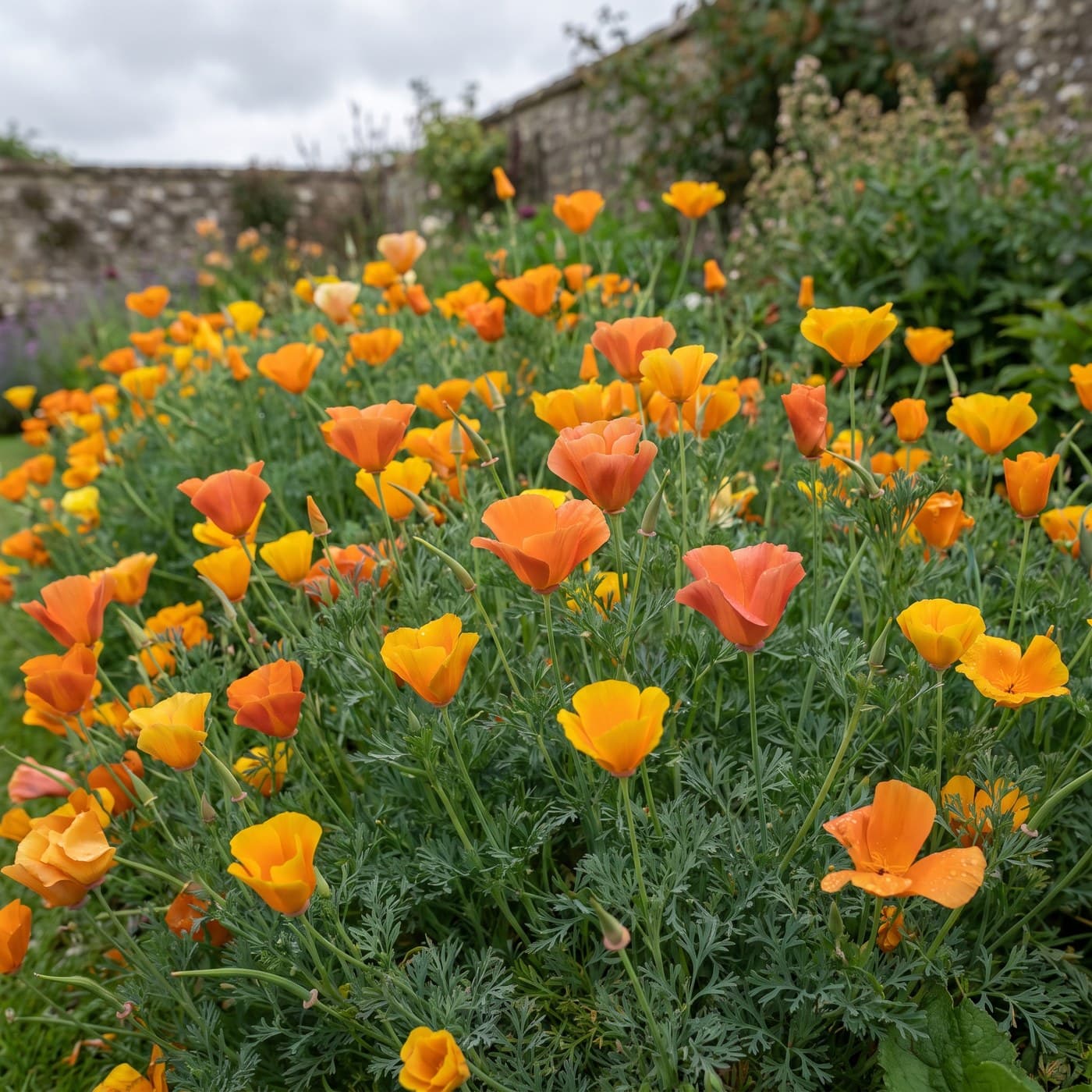
Silky orange cups that thrive on poor, dry soil.
1,000 seeds per pack · one-off purchase, no subscription
Buy now- 1,000 seeds, hand-packed in a labelled inner packet with a printed quick-start card
- Dispatched within 1–3 business days, tracked, to any UK address
- Germination guarantee: if they don't sprout, we send them again
Why grow it
- The specialist for bad ground: thin, dry, stony or sandy soil produces MORE flowers, not fewer — rich soil just makes leaves
- Silky, sun-catching orange cups over blue-green ferny foliage, self-seeding into the same spot for years
- Sown direct in September under a cloche or cold frame, it overwinters as a young plant and flowers weeks earlier than a spring sowing
When to sow
Sow September under a cloche — needs protection from hard frost.
| Scotland & the North | Sow September under a cloche or cold frame — protection from hard frost is essential |
|---|---|
| Midlands, Wales & Northern Ireland | Sow September under a cloche — needs protection from hard frost |
| South of England | Sow September under a cloche (mildest South West: a sheltered, free-draining spot may carry it through) |
Growing questions
Why do you keep saying poor soil is better?
Because it's true, and it's unusual: in its native range Eschscholzia grows on dry, stony, low-fertility ground, and it keeps that preference in gardens. Rich, fertilised soil pushes it towards foliage; thin, sharp-draining soil pushes it towards flowers. Skip the compost and the feed entirely.
What does 'sow under a cloche' actually mean?
Sow the seed direct, where it will flower, then cover that patch with a cloche, a cold frame light, or even a clear storage box — anything that keeps hard frost and winter wet off the seedlings while letting light in. Lift the cover in spring. Without protection, a September sowing can be lost to a hard freeze; this is one of the autumn annuals the RHS says to overwinter under cover.
Why can't I start it in pots and plant it out?
The tap root. California poppy drives one straight root down almost immediately, and disturbing it checks or kills the plant — which is why transplanted trays disappoint. Sow direct, thin the seedlings where they stand, and leave the roots alone.
Will it come back next year?
Usually, by its own effort: let some of the long seed pods ripen and split, and it self-seeds readily into the same free-draining spot. Established colonies in gravel gardens carry on for years with no help at all.